

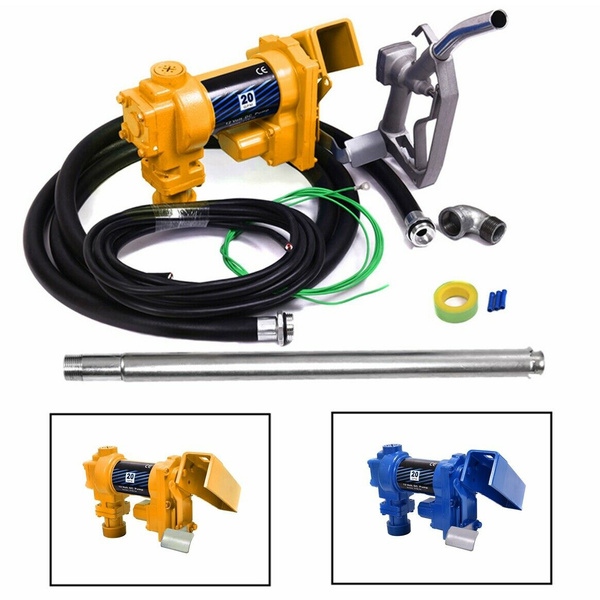
Imagine being stranded with an empty fuel tank, far from the nearest gas station. A stressful situation, right? Well, the solution for fast and safe refueling is here: a 12 Volt Fuel Transfer Pump. This handy device allows you to quickly and safely transfer fuel from a storage container to your vehicle or equipment, eliminating the need for heavy lifting and messy spills. With its ease of use and efficient design, it's a must-have for anyone who relies on fuel-powered machinery.
All About 12 Volt Fuel Transfer Pumps for Fast and Safe Refueling
A12 Volt Fuel Transfer Pumpis a portable device designed to move fuel from one container to another, typically powered by a 12-volt DC power source, like a car battery. Its significance lies in its ability to provide asafe and efficientmethod of refueling vehicles and equipment in remote locations or situations where traditional fuel sources are unavailable. Think of farmers in the field, construction workers on site, or boaters on the water – a 12V fuel transfer pump can be a lifesaver. These pumps are particularly useful when refueling heavy machinery that cannot be easily moved to a gas station. They eliminate the risks associated with manually pouring fuel, reducing the chance of spills and fires.
The concept of portable fuel transfer isn't new. Early methods involved hand pumps or simply pouring fuel, both of which were inefficient and dangerous. The development of the 12-volt fuel transfer pump represents a significant advancement. The key developments include the integration of electric motors for automated fuel transfer, the incorporation of safety features like automatic shut-off nozzles and explosion-proof construction, and the use of durable materials resistant to corrosion and fuel degradation. These advancements have made fuel transfer safer, faster, and more reliable.
What sets a 12 Volt Fuel Transfer Pump apart is its portability, ease of use, and safety features. Unlike large, stationary pumps, these devices are compact and can be easily transported. The simple design allows anyone to operate them without extensive training. Most importantly, these pumps are designed with safety in mind, featuring explosion-proof motors, automatic shut-off valves, and filters to prevent contamination. One expert in the field of agricultural equipment, John Miller, stated: "The 12-volt fuel transfer pump has revolutionized how we refuel our tractors and combines in the field. It saves us valuable time and reduces the risk of spills and injuries." Testimonials from construction site managers and marine mechanics echo similar sentiments.
Benefits of 12 Volt Fuel Transfer Pumps for Users
Theprimary benefitof using a 12 Volt Fuel Transfer Pump is theincreased convenience and efficiencyit offers during refueling. Imagine having to lug heavy fuel cans across a field to refill a tractor. With a 12V pump, you can simply connect it to a fuel storage tank and transfer the fuel directly to the vehicle, saving time and effort. Furthermore, the controlled fuel flow reduces the risk of spills, minimizing fuel waste and preventing environmental contamination. It offers a controlled fuel flow and significantly reduces the risk of spillage.
Consider a real-life example: a construction crew working on a remote highway project. Without a 12-volt fuel transfer pump, they would need to transport fuel in multiple trips using heavy cans, a time-consuming and potentially hazardous task. With the pump, they can quickly and safely refuel their equipment on-site, maximizing productivity and minimizing downtime. Another instance is during emergency situations, such as disaster relief efforts. These pumps can be used to rapidly refuel generators and other essential equipment, providing critical power in areas where access to fuel is limited.
Compared to traditional manual pouring or siphon methods, a 12 Volt Fuel Transfer Pump is far superior. Manual pouring is prone to spills and can be physically demanding, while siphoning poses health risks due to potential fuel ingestion. These alternative methods also lack the precision and control offered by a pump, leading to fuel wastage and inconsistent refueling. A study conducted by the National Institute for Occupational Safety and Health (NIOSH) found that using a fuel transfer pump significantly reduced the risk of musculoskeletal injuries associated with manual fuel handling.
How to Use a 12 Volt Fuel Transfer Pump
1. Preparation and Setup
Before you begin, ensure you have all the necessary components: the 12 Volt Fuel Transfer Pump, a power source (usually a 12V battery), fuel hoses, a nozzle, and a fuel storage container. Connect the pump to the battery using the provided clamps, ensuring correct polarity (positive to positive, negative to negative). Place the intake hose into the fuel storage container and the delivery hose into the fuel tank of the vehicle or equipment you are refueling. A best practice is to use a filter on the intake hose to prevent debris from entering the pump and causing damage.
2. Priming the Pump
Priming the pump ensures that the pump chamber is filled with fuel, which is necessary for it to operate effectively. Some pumps are self-priming, meaning they can draw fuel on their own. However, others may require manual priming. To prime a non-self-priming pump, you may need to pour a small amount of fuel into the intake hose or the pump chamber itself. Refer to the manufacturer's instructions for the specific priming procedure for your pump model. A common mistake to avoid is running the pump dry for an extended period, as this can damage the internal components.
3. Fuel Transfer
Once the pump is primed and all connections are secure, turn on the pump. Monitor the fuel flow through the delivery hose and nozzle. Use the nozzle to control the flow of fuel into the fuel tank. Avoid overfilling the tank, and pay attention to any unusual noises or leaks. If you encounter any problems, such as a sudden drop in pressure or a fuel leak, immediately turn off the pump and troubleshoot the issue. Once the refueling is complete, turn off the pump and disconnect the hoses. Properly store the pump and hoses to prevent contamination and damage.
Tips Before Using a 12 Volt Fuel Transfer Pump
Before using a 12 Volt Fuel Transfer Pump, conduct a thorough inspection of all components. Check the hoses for cracks or leaks, and ensure the electrical connections are secure. Familiarize yourself with the pump's operating instructions and safety precautions. Wear appropriate personal protective equipment (PPE), such as gloves and eye protection, to prevent contact with fuel. Ensure that the area is well-ventilated to avoid the build-up of flammable vapors.
It's important to avoid using the pump near open flames or sources of ignition. Fuel is highly flammable, and even a small spark can cause a fire or explosion. Never smoke while refueling or using the pump. Also, do not operate the pump in enclosed spaces without adequate ventilation. Ignoring these tips can lead to serious injuries or property damage. Furthermore, using the wrong type of hose can lead to premature wear and eventual failure.
Possible consequences of ignoring these safety guidelines include fuel spills, fires, explosions, and exposure to harmful chemicals. Always prioritize safety and follow the manufacturer's instructions to minimize the risk of accidents. Regular maintenance, such as cleaning the pump and replacing worn parts, can also help to ensure safe and reliable operation.
Common Issues and Solutions Related to 12 Volt Fuel Transfer Pumps
One common issue is a clogged filter or hose, which can restrict fuel flow. The solution is to regularly inspect and clean the filter and hoses. Another potential problem is a pump that fails to prime. This can be caused by a leaky hose connection or a worn pump seal. Check all connections and replace any damaged components. If the pump motor is not working, check the battery connections and ensure that the pump is receiving power. A blown fuse can also prevent the pump from operating.
Sometimes the pump may deliver fuel slowly. This can be due to a low battery voltage or a partially blocked hose. Ensure that the battery is fully charged and inspect the hoses for kinks or obstructions. If the pump is making unusual noises, it may indicate a problem with the internal components. In this case, it is best to consult a qualified technician for repair. Remember to always disconnect the pump from the power source before attempting any repairs or maintenance.
Another common challenge is fuel contamination. Using a fuel filter is the primary defense. Regularly change the fuel filter to maintain the integrity of the fuel being transferred. Store the pump and hoses in a clean, dry environment to prevent contamination.
Conclusion
In summary, the 12 Volt Fuel Transfer Pump is avaluable toolfor anyone who needs to refuel vehicles or equipment in remote locations or situations where traditional fuel sources are unavailable. Its portability, ease of use, and safety features make it a superior alternative to manual pouring or siphon methods. By following the proper operating procedures and safety guidelines, you can ensure a safe and efficient refueling experience. The main benefits include time savings, reduced risk of spills, and improved overall safety.
For optimal use, remember to always inspect the pump and hoses before each use, use appropriate PPE, and avoid using the pump near open flames or sources of ignition. Regularly maintain the pump and replace any worn parts. With proper care and attention, a 12 Volt Fuel Transfer Pump can provide years of reliable service. We strongly encourage you to implement the use of a 12 Volt Fuel Transfer Pump to improve your refueling processes, enhance safety, and increase efficiency in your daily activities.